
We'll discuss your goals, current challenges, and how our process can help to drive real business growth.
SEO
Enterprise SEO Guide: Strategies for Large-Scale Success
Taher Batterywala
March 27, 2026
10 min
TABLE OF CONTENTS
If you’re leading SEO at a large enterprise like Microsoft or Amazon, you know that SEO programs do not fail because of bad strategy. They fail because recommendations sit in a backlog for months, waiting on approvals, engineering resources, or alignment across teams that do not share the same priorities.
That execution gap has always been the hard part. But in 2026, the cost of moving slowly is higher than ever. Ahrefs found that AI Overviews reduce organic CTR for the top-ranking page by 58%. For enterprises with organic footprints spanning tens of thousands of keywords, that causes a serious pipeline problem.
This guide covers what enterprise SEO actually requires in 2026, the real constraints that make it hard, and a practical 90-day plan to move from strategy to shipped results. Let’s get into the details.
TL;DR
Enterprise SEO runs search programs at scale across thousands of pages, requiring governance, templates, localization, and cross-team execution unlike SaaS or B2B SEO which is much simpler.
Challenges include crawl and indexing scale, template sprawl, slow approvals, inconsistent ownership, localization complexity, duplicate content, and measurement attribution across teams and markets.
The SEO stack and process for enterprises combine technical audits, template fixes, CMS automation, content clusters, analytics, integration, and an operating model with central standards plus SEO partners.
Optimize enterprise SEO for AI by structuring concise definitions, FAQs, tables, entity clarity, first-party evidence, schema, and editorial QA to increase citation and snippet eligibility.
What is Enterprise SEO?
Enterprise SEO is the practice of managing organic search visibility across large-scale websites. We are talking about sites with thousands to millions of pages, involving multiple stakeholders, markets, templates, and significant brand or legal risk. It requires automation, governance, and cross-functional coordination that standard SEO simply does not deal with.
What makes it "enterprise" is not traffic volume or domain authority. It is the organizational complexity around shipping SEO work.
And in 2026, success looks different than it did even 2 years ago, because it is no longer just about keyword rankings. Enterprise SEO success is measured by:
- Qualified pipeline contribution from organic entry points
- Brand authority across search and AI surfaces
- Citation frequency in AI-generated answers
- Self-serve conversion driven by organic content
If your enterprise SEO program is still reporting on rankings and traffic as primary KPIs, you are measuring the wrong things.
The Real Constraints of Enterprise SEO
While enterprise SEO strategies may look good on paper, but they fail miserably when it comes to execution. This is because the recommendations do not get shipped quickly. We’ll expand the major issues below:
Scale Problems: Indexing, Crawl Budget, and Template Sprawl
Large enterprise sites develop technical debt fast. Common symptoms include millions of URLs with parameter sprawl, faceted navigation bloat creating hundreds of thousands of near-duplicate pages, multiple template owners producing inconsistent metadata, and duplicate content pathways driven by internal org charts rather than user journeys.
These issues inflate hosting costs, slow release cycles, and create compounding problems that get harder to fix with every quarter that passes.
Governance Problems: Ownership, Risk, and Approval Bottlenecks
In an enterprise where SEO teams have 50+ members, there is no clear ownership defined for templates, internal linking rules, schema, or content standards. Legal and brand approval processes create multi-week bottlenecks for even minor metadata changes. And SEO is "measured" by traffic, but other teams control the systems that actually drive that traffic.
That gap creates what you might call an accountability vacuum. The SEO team is responsible for outcomes but does not control the inputs.
The fix is treating SEO governance as an operating model, not a policy document. That means shared ownership defined in something like a RACI chart, a regular decision-making cadence (monthly steering, weekly execution), and an executive sponsor who keeps SEO on the business agenda.
Quality Enforcement is Stricter Due to High Risk Exposure
Google's March 2024 core update introduced stricter spam policies targeting scaled content abuse and site reputation abuse (sometimes called "parasite SEO"). And recently, Google again completed roll out of its March 2026 spam update. For enterprises, this matters because multiple teams and external partners often publish content under the same brand domain.
Without quality governance, that creates real risk. A partner microsite, an unvetted blog contributor, or a bulk-published content library can all trigger quality issues that affect the entire domain. Enterprises with large publishing footprints are especially exposed.
The Enterprise SEO Strategy Stack (What to Prioritize First)
Enterprise SEO works when you sequence correctly. Here is the order that matters.
Prioritize Outcomes and Measurement First
Before touching a single template or writing a single brief, define what you are measuring and why.
For enterprise SEO in 2026, your measurement framework should cover four dimensions:
- Visibility: Rankings, impressions, and share of voice across both traditional search and AI surfaces
- Demand: Qualified organic visits, assisted conversions, and pipeline contribution
- Trust: Backlink quality, author credibility signals, and brand mention frequency
- AI Visibility: Citation counts and cited URLs where measurable
That last one is now partially possible. In February 2026, Microsoft launched the AI Performance dashboard in Bing Webmaster Tools as a public preview. For the first time, publishers can see how often their content is cited in Copilot and AI-generated answers on Bing, with metrics including total citations, average cited pages per day, grounding queries (the phrases AI used to retrieve your content), and page-level citation activity.
As Search Engine Land reported, this is the first dedicated AI citation tracking tool from a major search platform. Google Search Console includes AI Overview data within its overall Performance reporting (under the "Web" search type), but it does not yet offer a separate AI citation report.
So your best bet is to build your measurement system now. Track what you can, establish baselines, and be ready to expand as more AI visibility data becomes available.
Triage Technical SEO by Enterprise Risk
Not every technical issue deserves the same urgency. Enterprise teams need a prioritization lens:
- "What breaks discovery?" Crawl and indexation issues sit at the top. If search engines cannot find or index your pages, nothing else matters.
- "What breaks trust?" Quality signals, policy compliance, and security come next. These protect you from algorithmic penalties and AI exclusion.
- "What breaks conversion?" Page speed, UX, and Core Web Vitals matter, but they are optimization layers, not existential risks.
On the technical side, the essentials for enterprise sites include a clear indexation strategy (defining what should exist versus what should actually be indexable), proper handling of parameters and faceted pages using canonical rules, robots directives, and sitemaps segmented by content type or intent.
For enterprises with massive product catalogs or frequently updated content, IndexNow is worth implementing. It is a multi-engine protocol that notifies search engines immediately when content is added, updated, or removed, cutting the lag between publishing and indexation.
And Core Web Vitals remain a confirmed ranking signal from Google. For enterprise sites, that means CDN optimization, server-side rendering strategies, and consistent mobile performance benchmarks across every template.
Enterprise Content Strategy for AI-First Search
Content still matters at the top of the funnel. But in 2026, it needs to be extractable, credible, and structured for both traditional SERPs and AI-generated answers.
How AI Overviews and LLMs Are Changing Content Discovery
According to Google Search Central, there are no additional requirements to appear in AI Overviews or AI Mode. You won’t need any special schema markup. Standard SEO best practices (helpful content, clean structure, technical accessibility) are what make your content eligible.
But "eligible" and "featured" are two different things.
What matters is how Google's AI features work behind the scenes. The Google Search Central blog explains that AI Mode uses a technique called "query fan-out," where a single user query triggers dozens of related searches across subtopics simultaneously.
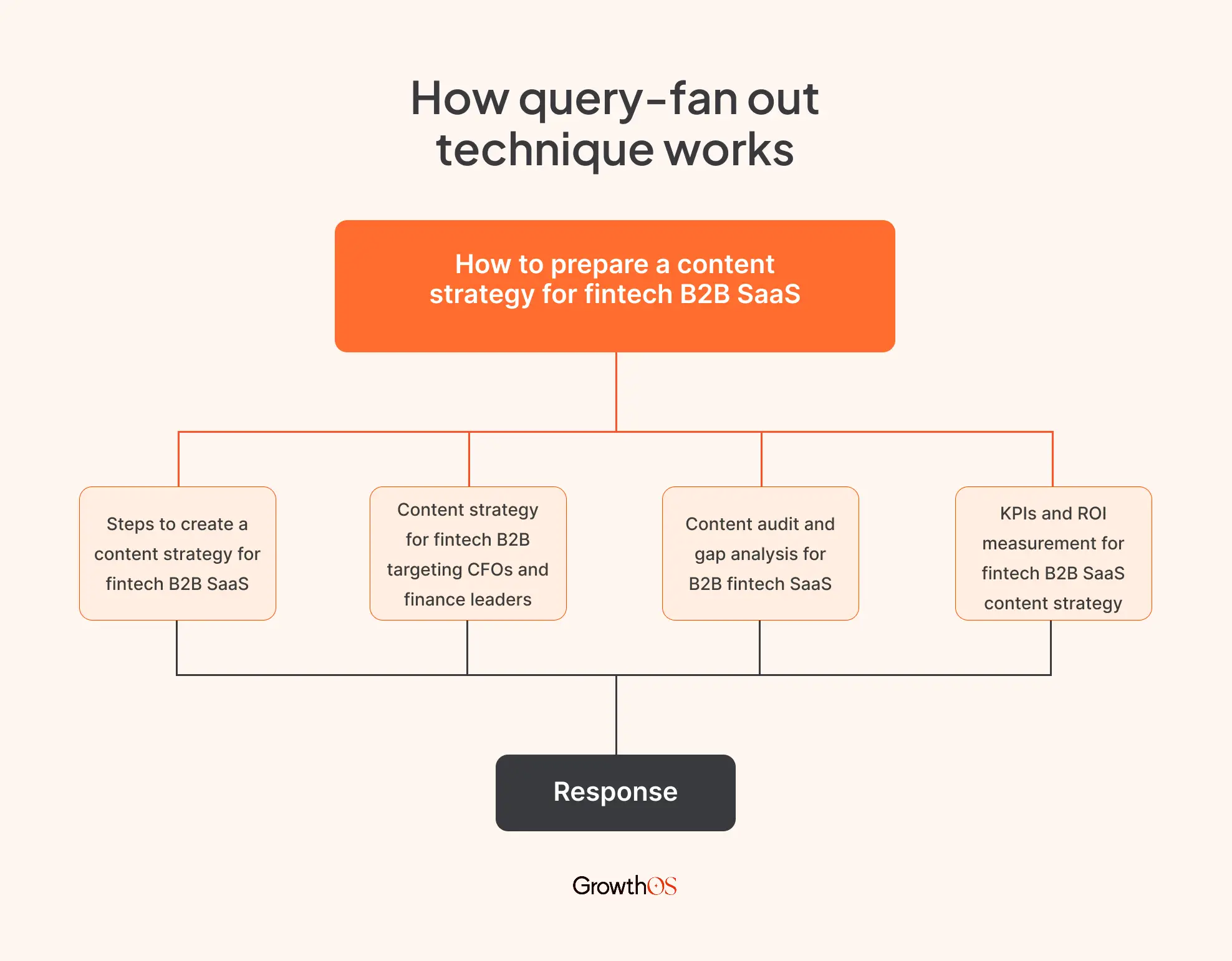
This means more diverse sources get surfaced, and content that might not rank in the traditional top 10 can still be cited.
The practical implications for enterprises:
- Content that can be fully summarized by AI without a click-through loses traffic. Content that requires depth, interactivity, or fresh data retains it.
- Brands that become the source-of-truth for their category get cited repeatedly.
- Google has stated that clicks from AI Overviews tend to be higher quality, with users spending more time on the site after clicking through.
Building "Citable Content" at Enterprise Scale
If you want AI systems to cite your content, you need to build it for extraction. That means:
- Clear definitions and structured sections: Use H2 and H3 headings that mirror user queries. Lead each section with a direct, concise answer before expanding into detail.
- First-party evidence: Original data, proprietary research, screenshots, and documented methodology are significantly more citable than aggregated information.
- Entity clarity: Use precise product names, category terms, and industry terminology consistently. AI systems rely on entity recognition to match content to queries.
- Concise answer blocks: Aim for 40 to 60 word paragraphs that can stand alone as extractable answers, paired with deeper context below.
- Structured data where applicable: FAQ schema and HowTo markup help AI systems parse your content more reliably.
At the enterprise level, this requires an operating model around content, not just a content calendar. So, you need standardized content templates and briefs, subject matter expert (SME) review workflows, factual verification and policy compliance checks, and a consolidation strategy that merges duplicate or thin pages to strengthen authority rather than publishing net-new content that competes internally.
Google's spam update policies reinforce this. Quality control at scale is now a competitive advantage, not just a compliance exercise.
The People and Process Layer for Execution
Strategy is abundant. Execution is scarce. Most enterprise SEO programs fail because the operational infrastructure does not exist to ship work consistently.
Team Structure and Ownership
There are two common models that work:
- Centralized SEO team that sets standards, manages tools, and defines priorities for the organization
- Embedded SEO partners placed within product, content, and engineering teams who execute against those standards
All successful enterprise programs use a hybrid of both. The critical thing is having a clear ownership map for SEO brief templates, technical SEO, keyword research, content production, reporting etc.
Decision-making cadence matters too. A monthly steering committee for strategic direction and weekly execution syncs for tactical progress is a common pattern that works.
International and Multi-Market Considerations
For enterprises operating across geographies, enterprise SEO adds another layer of complexity. The same product can trigger completely different search behavior in different markets. Hreflang governance and regional template management need to be systematized, not handled on a case-by-case basis.
Translation alone is not localization. Content needs to reflect local search intent, terminology, and competitive landscape. And duplicate global pages competing with localized versions is one of the most common (and most damaging) international SEO mistakes at the enterprise level.
A Practical 90-Day Enterprise SEO Plan
Not everything at once. Here is a phased approach sized for enterprise teams.
Days 1 to 30: Baseline, Risk, and Quick Wins
- Run a crawl and indexation health audit. Identify what should not be indexed and clean it up.
- Fix the highest-impact template issues: title tag logic, canonical rules, and internal linking patterns.
- Clean up analytics and Search Console instrumentation so your data is trustworthy.
- Set up your measurement dashboard covering both traditional metrics and AI visibility baselines.
Days 31 to 60: Build the Systems
- Start content consolidation. Merge duplicate and thin pages to strengthen authority on core topics.
- Implement internal linking automation with guardrails, using a hub-and-spoke model organized by template type.
- Define editorial standards for "citable content" with standardized templates, briefs, and SME review workflows.
- Formalize your governance model: publish an ownership map, set a decision cadence, and establish a release management process for SEO changes.
Days 61 to 90: Scale, Expand, and Prove Impact
- Roll out multi-market SEO if applicable, including hreflang implementation and localized templates.
- Build executive reporting dashboards tied to business outcomes (pipeline, revenue, brand search) rather than vanity metrics.
- Run AI visibility checks using Bing AI Performance and Google Search Console data.
- Conduct your first quarterly impact review, looking at pipeline contribution, brand search lift, and citation trends.
When to Use an Enterprise SEO Partner (And What to Look For)
At some point, most enterprise teams face a clear decision: keep trying to build internally, or bring in a partner who can execute end-to-end.
Signs Your In-House Team Is Stuck
These are the patterns that signal it is time to consider outside help:
- SEO recommendations are produced consistently but do not get shipped
- Content scales in volume but quality drops, or new pages start competing with existing ones
- There are too many priorities and no sequencing framework
- Measurement exists but is not tied to pipeline or revenue
What "End-to-End Execution" Should Actually Mean
A real operator-led partner does not just hand over audit reports and walk away. They handle technical prioritization and implementation guidance, content systems (briefs, production, editorial QA, consolidation), governance frameworks and release management, AI search optimization across both traditional and AI surfaces, and content marketing that is structured for discoverability and citation.
Enterprise SEO Wins by Building Systems, Not Campaigns
Enterprise SEO in 2026 is a systems game. Governance plus templates plus content standards plus measurement, sequenced and shipped consistently.
The 2026 shift requires optimizing for discovery across both traditional SERPs and AI-generated answers. Blue links still matter, but they are no longer the whole picture. Traffic may decline for certain query types, but qualified pipeline, brand authority, and AI citation presence can all grow at the same time.
The enterprises that win will not be the ones with the biggest budgets or the most content. They will be the ones with the most disciplined operating model, the clearest ownership, and the strongest feedback loop between measurement and execution.
Ready to move from strategy to execution? Hire GrowthOS to manage end-to-end content marketing with enterprise-grade SEO execution, from technical foundations to AI visibility.

Taher Batterywala
Organic Growth Lead
Taher Batterywala is an SEO and Growth Content Marketer. With over 8 years of B2B marketing experience and a diversified skill set, he helps craft winning strategies and execute end-to-end campaigns for B2B and SaaS companies to achieve scalable organic growth. Outside of work, he enjoys watching movies, photography, and dabbling in design. You can find him on LinkedIn and X.

More insights
Get Growth Insights Delivered to Your Inbox
Join B2B marketers getting weekly strategy breakdowns on SEO, AI search, PPC, and YouTube—straight talk, no generic advice.
Oops! Something went wrong while submitting the form.




.svg)