
We'll discuss your goals, current challenges, and how our process can help to drive real business growth.
Content Marketing
The Most Definitive Guide to B2B Content Marketing (2026)
Taher Batterywala
January 7, 2026
15 min
TABLE OF CONTENTS
B2B content marketing is a strategic system for creating and distributing content that solves business problems, builds authority, and supports revenue across long buying cycles. In 2026, that system has to work in a new discovery layer.
AI Overviews and LLM-based experiences often answer questions before a click happens. That shifts the bar from keyword lists to content with clear context, strong evidence, and a point of view that a buyer can trust.
This guide covers the fundamentals and the 2026 shifts, from strategy and assets to distribution, measurement, and optimizing your content for LLM visibility.
TL;DR
A strong B2B content marketing program in 2026 is a system that turns buyer questions into decision-ready content, then distributes and optimizes it for both humans and AI answers. Here’s the blueprint:
1. Build a buyer-led strategy first: Map personas, pain points, and funnel stages so every asset supports awareness, evaluation, or conversion.
2. Create assets that match how B2B buyers decide: Use blogs for discovery, reports for depth, case studies for proof, and video or webinars to reduce learning friction.
3. Repurpose one “source” asset into multiple formats: For example, turn one report into a blog post, short clips, a webinar, a carousel, and a sales one-pager.
4. Distribute across owned, earned, and paid channels: Prioritize direct engagement through newsletters and social, then use paid to scale what already performs.
5. Measure pipeline impact, then optimize quarterly: Track engagement and intent actions, connect content to pipeline, refresh winners, consolidate overlap, and improve AI extractability with clear structure and updates.
These steps help you build authority, earn demand, and stay visible as AI overviews reshape discovery.
What is B2B Content Marketing?
B2B content marketing is the process of creating targeted content that attracts, educates, and converts business decision-makers. It works because most buyers want to understand the problem, compare options, and build internal consensus before they talk to sales. Gartner found 61% of B2B buyers prefer a rep-free buying experience, which makes content a core part of the buying journey.
At a practical level, B2B content marketing includes:
- Audience research
- Content mapped to buyer journey
- Distribution through appropriate channels
A guide like the “invoice approval workflow checklist” pulls early-stage searches. A case study showing a $30,000 annual time savings supports evaluation. A security and implementation page helps close.
From 2025 onwards, there is one more layer. Your content also needs to show up inside AI-generated answers. That means your pages need to be easy for both humans and models to understand, summarize, and cite.
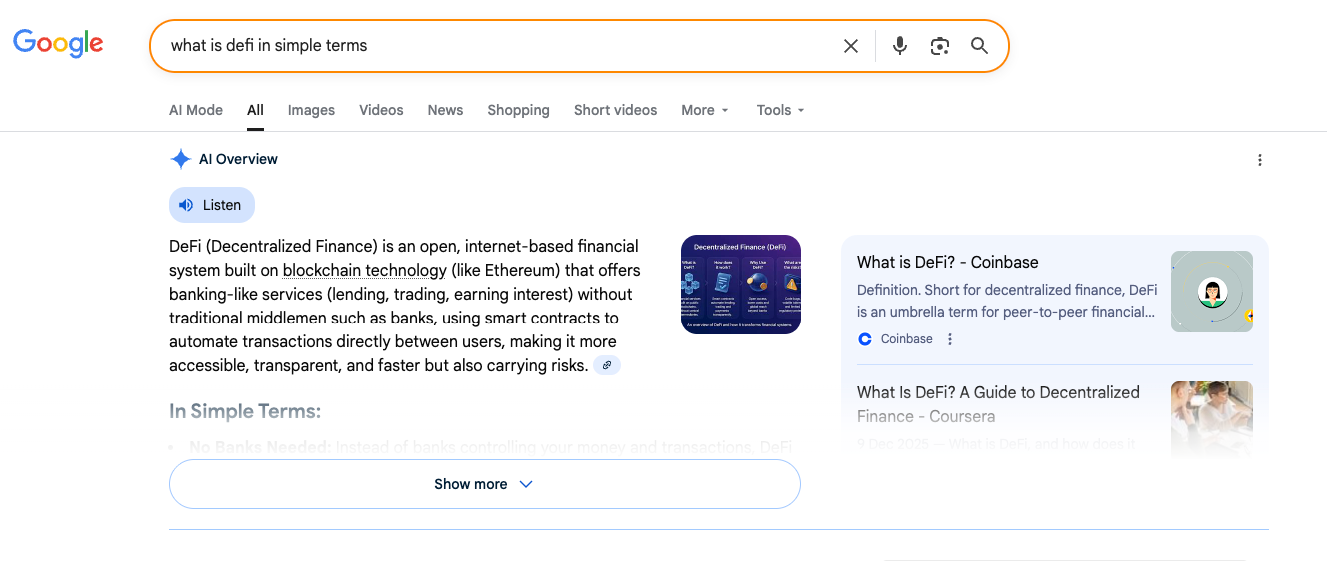
Clear structure, specific definitions, and proof points now matter as much as keywords and rankings. And this shift affects B2B and B2C differently, because the buyer journey, decision risk, and content depth are not the same.
With that in mind, let’s break down the key differences between B2B and B2C content marketing.
How Do B2B and B2C Content Marketing Differ?
B2B and B2C content marketing look similar on the surface, but they win in different ways. B2B content has to earn trust across longer buying cycles and multiple stakeholders, so proof and clarity matter more. B2C content usually works faster because the decision is simpler and more emotion-led.
Let’s look at their key differences:
Why B2B Content Marketing Matters In 2026
B2B buyers aren’t interested in folks who hard-sell to them. They start with questions, comparisons, and internal research, and then shortlist the most relevant ones. Content is how you show up early, earn trust, and stay in the deal when the buying cycle stretches.
These are the four major reasons why content marketing is an effective channel for B2B audiences in 2026:
- It is a cost-efficient lead engine. Industry benchmarks often cite that content marketing can generate 3 times more leads at 62% lower cost than outbound.
- It compounds. Evergreen pages keep driving demand even if you have published them months and years earlier, especially with scheduled refreshes.
- It protects you from click loss. AI Overviews are pulling answers into the search results, which is shrinking organic click-through rates on many informational queries.
- It helps you build direct relationships. Email subscribers, webinar registrations, and product-led nurture flows let you reduce dependence on third-party algorithms.
Let’s do a simple math here. If outbound costs you $10,000 to generate 50 sales-qualified leads, a content program that improves efficiency over time can lower your blended cost per lead by using evergreen pages, email capture, and retargeting. The exact ratio varies by category, but the compounding effect is real when you treat content like an asset, not a campaign.
To make this measurable, you need to connect content to outcomes, not just traffic. That brings us to ROI.
The ROI Of Effective B2B Content Marketing Strategies
B2B content marketing ROI is not “more traffic.” It is more qualified conversations, faster deal progression, and content that keeps paying you back after the publish date.
That is why the most useful benchmark is effectiveness, not output. Content Marketing Institute’s latest B2B research shows 59% of B2B marketers rate their content marketing as at least somewhat effective. The biggest difference between teams that plateau and teams that grow is not volume, it is relevance, quality, and stronger team capabilities.
Here are practical levers that consistently push ROI up:
1. Pick a revenue-linked content mix
If your calendar is all top of funnel education, you will struggle to prove pipeline impact. A simple mix that works for most B2B categories:
- 40% problem aware education (high intent informational)
- 40% solution aware evaluation (comparisons, alternatives, buying guides)
- 20% proof assets (case studies, implementation, pricing logic)
2. Refresh winners instead of only publishing new
Quarterly, review your top organic landing pages, then update what buyers actually notice:
- Examples, screenshots, and current competitive context
- Missing sections that answer common objections
- New FAQs that remove friction
3. Optimize for AI citations, not just rankings
AI visibility is the new metric. Make it easy for those systems to quote you accurately:
- Put a clear definition and direct answer near the top
- Use scoped sections, tables, and FAQs for easy extraction
- Add proof points and sourceable claims that can be cited
To get this kind of ROI consistently, you need a strategy that ties goals, audience, funnel stages, and channels into one execution plan. That is exactly what we will build next.
Building A Winning B2B Content Marketing Strategy
A B2B content marketing strategy is the system that makes your content useful to the business, not just visible on the internet.
Without a strategy, teams publish a lot and still struggle to answer simple questions like: Which pieces create demand, which ones move deals forward, and which ones are just noise?"
In 2026, strategy matters even more because content discovery is changing. Buyers still search, but they also get answers from AI overviews and chat-based tools. So your content has to do two jobs at once. It has to earn clicks and conversions, and it has to be easy for AI systems to understand, quote, and summarize.
Here’s how to build a strategy that holds up across a long B2B buying cycle and an AI-influenced search ecosystem.
Defining Your B2B Content Marketing Goals And Objectives
Start by giving every content asset a job. If you cannot explain what a piece is supposed to achieve, it is not strategy, it is publishing.
A practical way to set goals is to tie them to outcomes you can measure, then work backward into content types and distribution.
CMI’s research shows what many teams use content for, including brand awareness (87%), demand or lead generation (74%), and sales or revenue (49%). Use that as a reference when you prioritize goals.
Use SMART criteria so your goals are specific and measurable.
- Pick the goal. Is it brand awareness, subscriber growth, lead generation?
- Choose the metric. Shall we track demo requests, MQL to SQL rate, or organic traffic growth?
- Set a time window. A month, quarter, or year?
- Define the bar. What does success look like?
Here’s a sample for you:
Goal: Increase sales qualified demo requests from organic content by 20% in 90 days, while keeping cost per lead under $150 from paid distribution.
The above goal immediately shapes your content plan:
- You need problem led pages for discovery.
- You need comparison or evaluation assets for mid funnel.
- You need proof assets (case studies, ROI pages) for bottom funnel.
Once goals are clear, the next step is obvious. You need audience clarity that is specific enough to guide what you write and how you position it.
Conducting Audience Research For B2B Content Marketing
B2B content fails when it targets “everyone in the ICP” and ends up resonating with no one.
Good audience research tells you:
- Who is on the buying committee
- What each role cares about
- What objections slow the deal down
- What language they use when they describe the problem
And you can figure out your ‘true’ ICP based on the following sources of information:
1. Sales Call Notes and Insights
Start with the language buyers already use. Pull exact phrases, not paraphrases. Capture objections that show up late in the cycle, like security reviews, implementation time, procurement approvals, and internal buy-in.
2. Support Tickets And Onboarding Questions
These show what buyers struggle with after they start using the product. Turn recurring queries into educational content, FAQs, setup guides, and troubleshooting pages. It reduces churn and eases the pressure on the customer support team.
3. CRM And Product Usage Data
Segment what you publish by company size, industry, maturity, and use case. A startup buyer and an enterprise buyer do not evaluate the same way, even if they buy the same product.
4. Public Signals
Use job posts, investor updates, compliance changes, LinkedIn conversations, and review sites to spot what your market is prioritizing right now.
This is a practical mini template you can use to build your Ideal Cutomer Profile (ICP):
- Role
- KPIs they own
- Top 3 pain points
- Top 3 objections
- Proof they trust
- Content formats they consume
- Channels they use
For example, if you sell a finance automation platform, your content should not speak to “finance teams” as one. Instead, you can create three different segments:
- CFO cares about risk, cost, and audit readiness.
- Controller cares about workflow and accuracy.
- IT cares about security, access controls, integration, and implementation time.
Now that you know who you are writing for, you need to know what already exists in the market and where you can win.
Performing Competitive Analysis In B2B Content Marketing
Competitive analysis doesn’t mean copying competitor topics. It is figuring out their strong and weak points and where there’s a gap (like the buyer still has unanswered questions).
SEO data helps, but it is only the starting point. The real value comes from combining rankings with a quality review, so you can see what the market is rewarding and what buyers still need.
Here is a simple workflow that works:
1) Identify Your Real Competitors
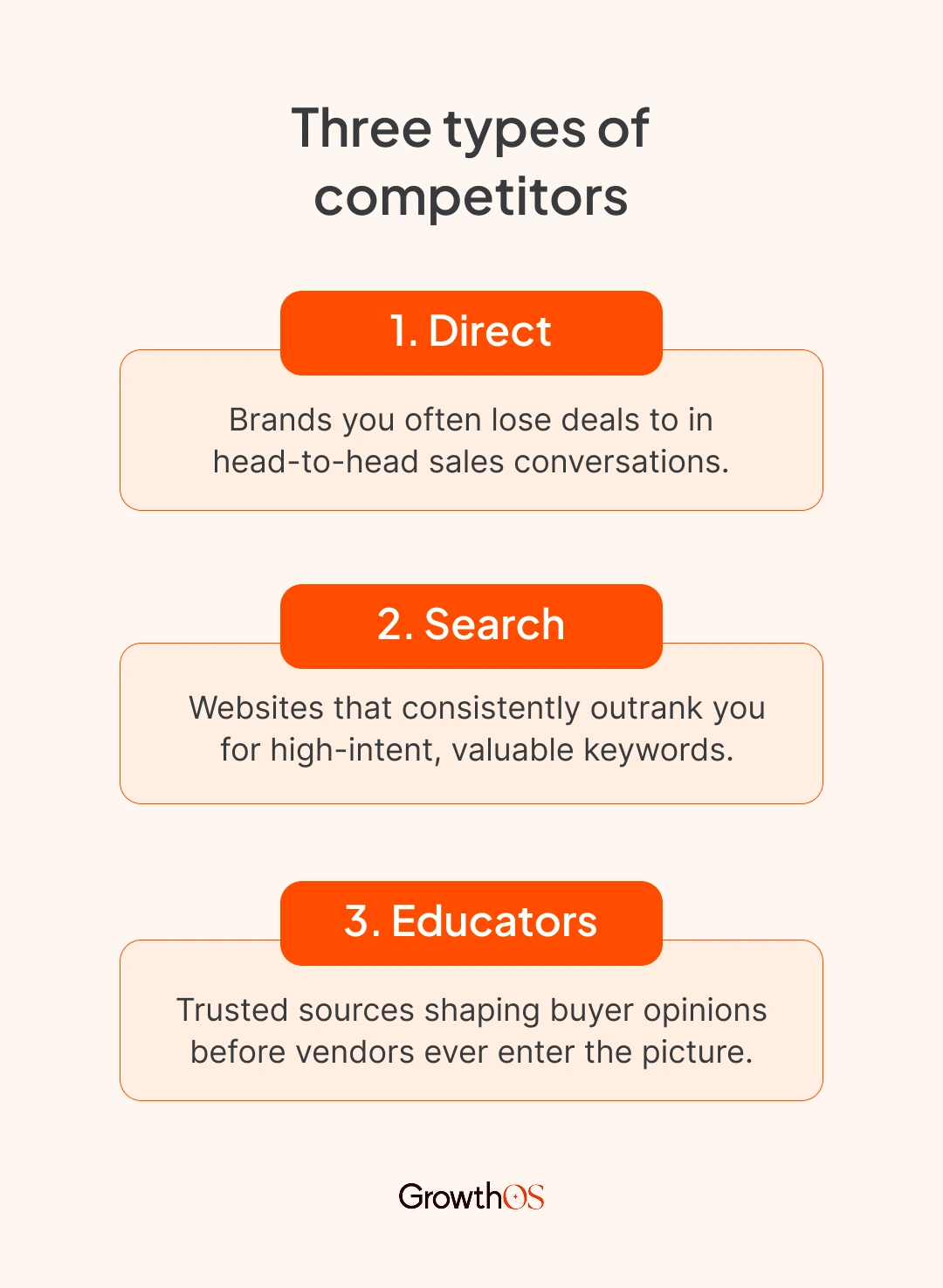
Competitors usually fall into these three types:
- Direct competitors (brands you lose deals to in sales conversations)
- Search competitors (sites that consistently own the keywords you want)
- Category educators (sites that shape buyer opinions before buyers ever shortlist vendors)
2) Find What Drives Their Results
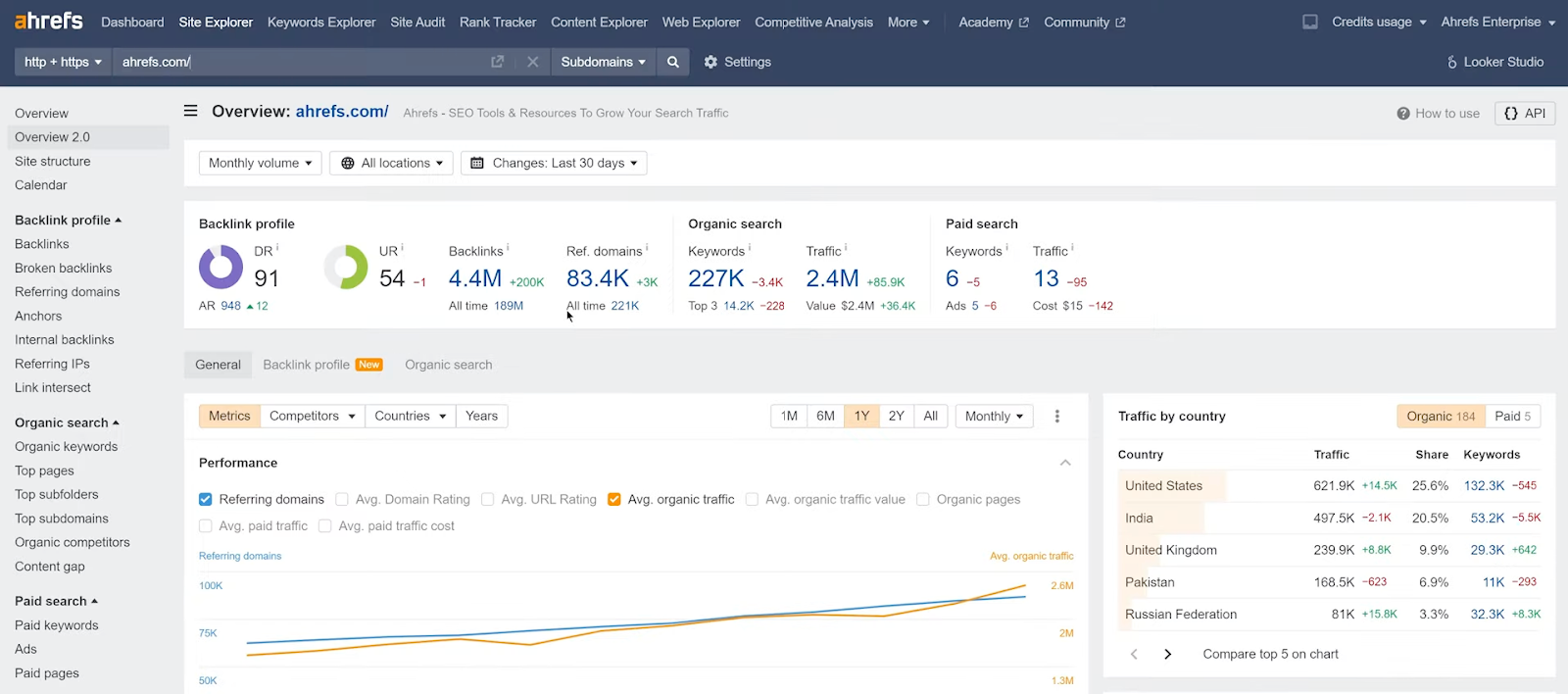
Use tools like Ahrefs Site Explorer to review:
- Top pages by traffic
- Top organic keywords
- Topic focus and content depth
3) Run A Content Gap Check
Ahrefs Content Gap analysis helps to find keywords competitors rank for that you do not. Start with commercial intent terms first, like comparisons, alternatives, and implementation questions.
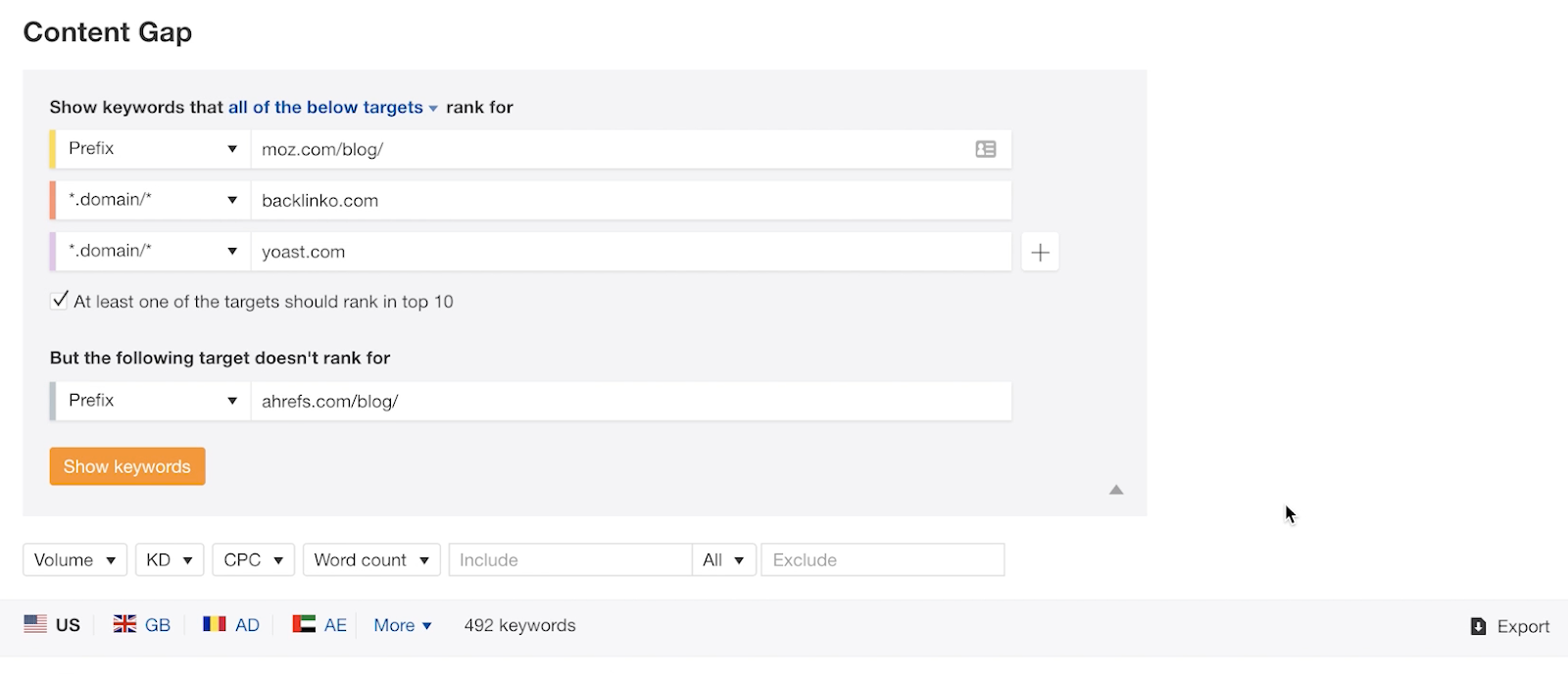
After you have covered those keywords, you can start targeting broader terms to build topical authority.
4) Review Quality, Not Just Keywords
Pick the pages that rank, then ask:
- Does it answer real evaluation questions, or just define terms
- Does it show proof (examples, numbers, screenshots, workflows)
- Does it match search intent with the product/service they are offering
5) Turn Gaps Into A Plan
You can now take the following approach to build a plan:
- Cover topics they skipped
- Take a better angle (more specific, more practical, more current)
- Bring better proof (real examples, clear and simple language, latest data)
- Use better distribution (turn one insight into multiple assets)
Once you know the gaps, you can plan content that matches how buyers actually move from awareness to purchase.
Creating Content For All Stages Of The B2B Marketing Funnel
In B2B, content is not only for discovery. It is also one of the influencing factors in how deals move forward.
So instead of thinking “we need more blogs,” think “we need coverage.” Coverage means the buyer can find the right answer no matter where they are in the journey and no matter which stakeholder is asking the question.
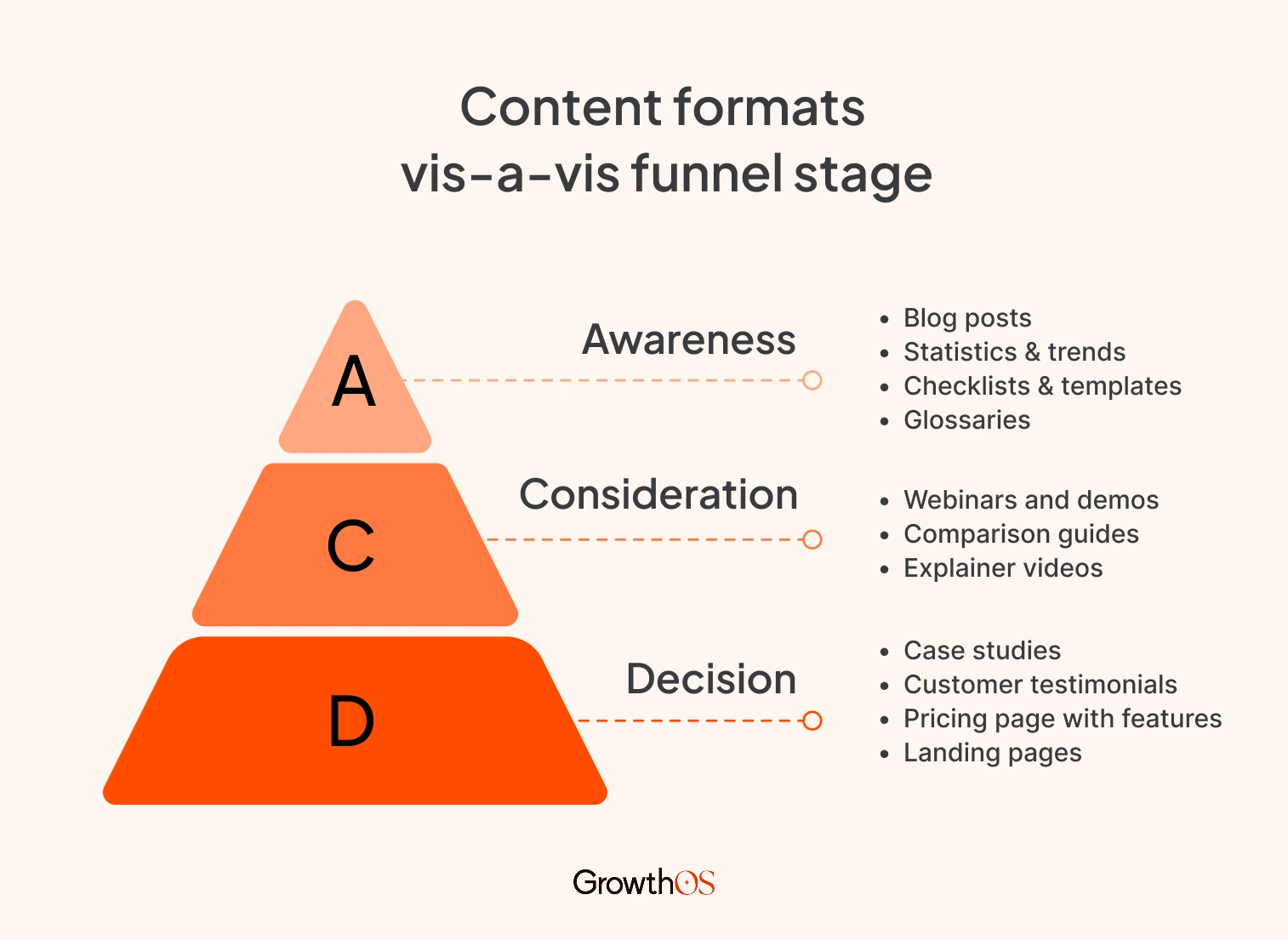
The best way is to plan according to the buyer stages of the marketing funnel. Here, we will discuss the three stages of the B2B buyer journey.
Awareness
In the awareness stage, the buyer isn’t familiar with the fact that your product exists. What they are looking for are answers to their questions; try to learn new things and do initial research. In most B2B categories, this is where teams waste months because they publish generic content that explains terms but does not help a buyer make sense of the situation.
Your job here is to teach the market how to think. If the reader finishes your page and can explain the problem better to their boss, you did it right.
What awareness content should do:
- Define the problem in plain language
- Explain why it happens, and its impact
- Introduce evaluation criteria without pushing a vendor choice
- Give the buyer a checklist they can use internally
Formats that work well:
- Educational blog posts that answer a specific question
- Industry explainers that clarify trends and tradeoffs
- Frameworks and checklists that simplify decisions
- Glossaries that define terms clearly (these also help search and AI summaries)
Consideration
In the consideration stage, the buyer accepts that the problem is real and now wants options. This is where they compare approaches, build a shortlist, and test whether a solution will actually work in their environment.
Your content here needs to be very specific. It should address implementation reality, integration, security, time to value, and the internal work required. Buyers want clarity because they are trying to avoid choosing a tool that may miss serving the intended purpose.
What consideration content should do:
- Compare approaches, not just vendors
- Show how implementation works in the real world
- Answer common objections early
- Help multiple stakeholders evaluate together
Formats that work well:
- Webinars and demos
- Comparison guides
- Implementation handbooks with rollout timelines
- Explainers that address objections and remove friction
Decision
In the decision stage, the buyer is usually down to one or two options. The problem is no longer understanding; it is risk. They need proof that the solution works, that the vendor is credible, and that they can justify the spend internally.
This is where you need to develop sales enablement content without sounding too salesy. The best decision assets make it easy for a champion to get approval from finance, IT, and procurement.
What decision content should do:
- Provide proof with context (not vague claims)
- Make ROI and costs easy to explain internally
- Reduce perceived risk around implementation and compliance
- Support stakeholder-specific approval criteria
Formats that work well:
- Case studies with numbers, constraints, and outcomes
- ROI calculators and simple payback logic
- Pricing and packaging pages that explain what is included
- Use case-specific pages that answer concerns directly
The best teams plan full funnel coverage by building a small library that answers the same core question from multiple angles, depending on where the buyer is.
Incorporating AI And LLMs Into Your B2B Content Strategy
AI can speed up workflows, but it also raises the bar for originality and clarity. CMI’s research shows 95% of B2B marketers say their organizations use AI-powered applications.
We are sharing a practical way to use AI without turning your content into the same generic output as everyone else.
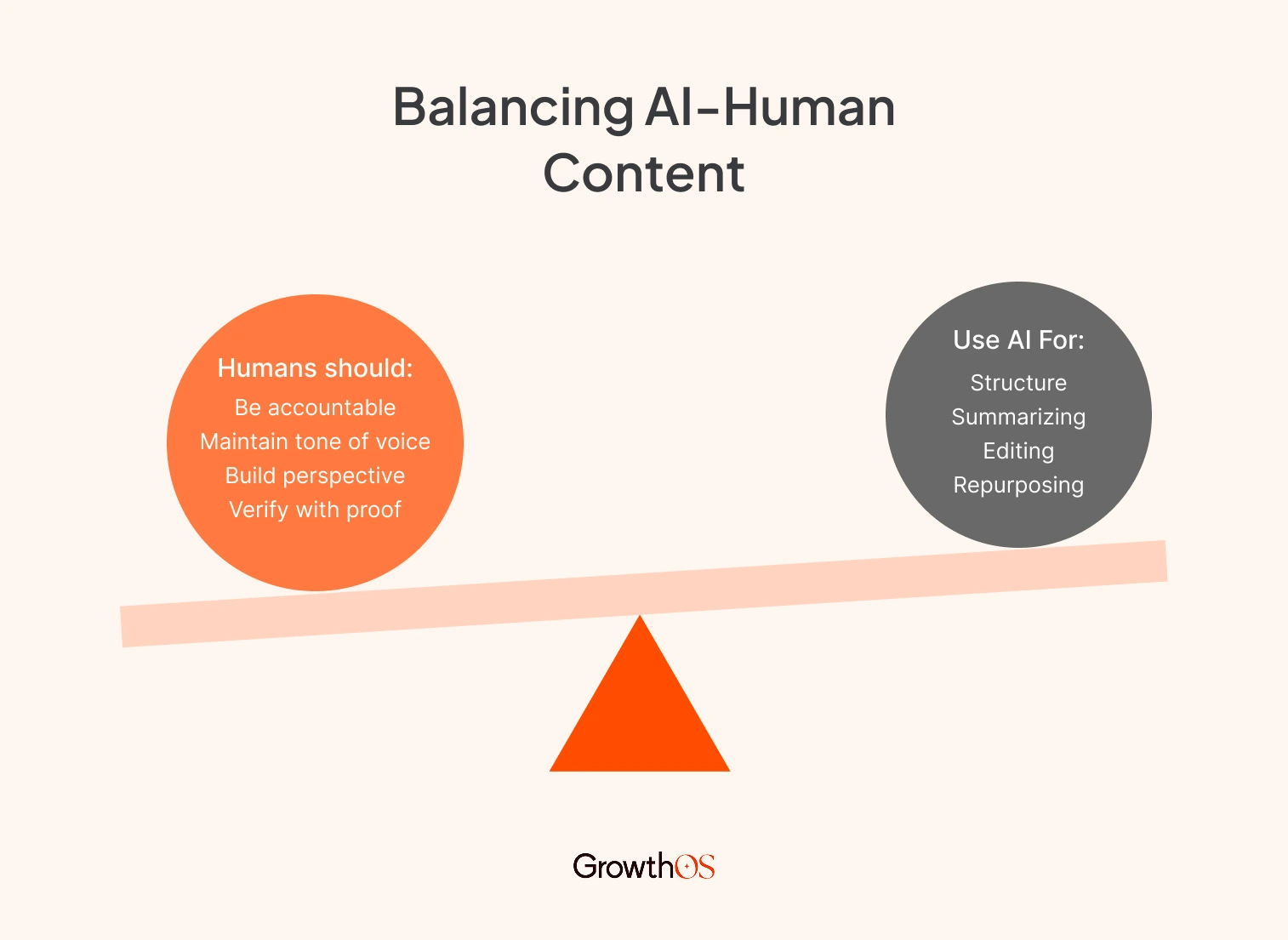
Use AI for:
- outlining based on intent
- summarizing internal notes
- repurposing formats
- spotting missing sections
Keep humans accountable for:
- point of view
- examples and proof
- accuracy, nuance, and editorial judgment
- brand voice and positioning
Google’s own guidance is clear that AI-generated content is fine if it is helpful and not created at scale just to manipulate rankings.
Make content easier for LLMs to understand and reuse. If you want to show up in AI summaries, structure matters.
These are the best practices to optimize your content for AI visibility:
- Clear definitions early (one clean paragraph that states what something is).
- Entity-rich language (specific tools, roles, standards, and processes, not vague claims).
- Direct answers with supporting detail (short answer first, then the how and why).
- Scannable formatting (tables, numbered steps, short subheads).
- Schema where relevant (FAQ, Article, Breadcrumb) so machines can parse context faster.
Also, do not ignore personalization. CMI’s 2026 trends report notes 89% say their organizations personalize content, but most describe it as basic. That is a gap you can exploit with smarter segmentation and role-based assets.
Essential Types Of B2B Content Marketing Assets
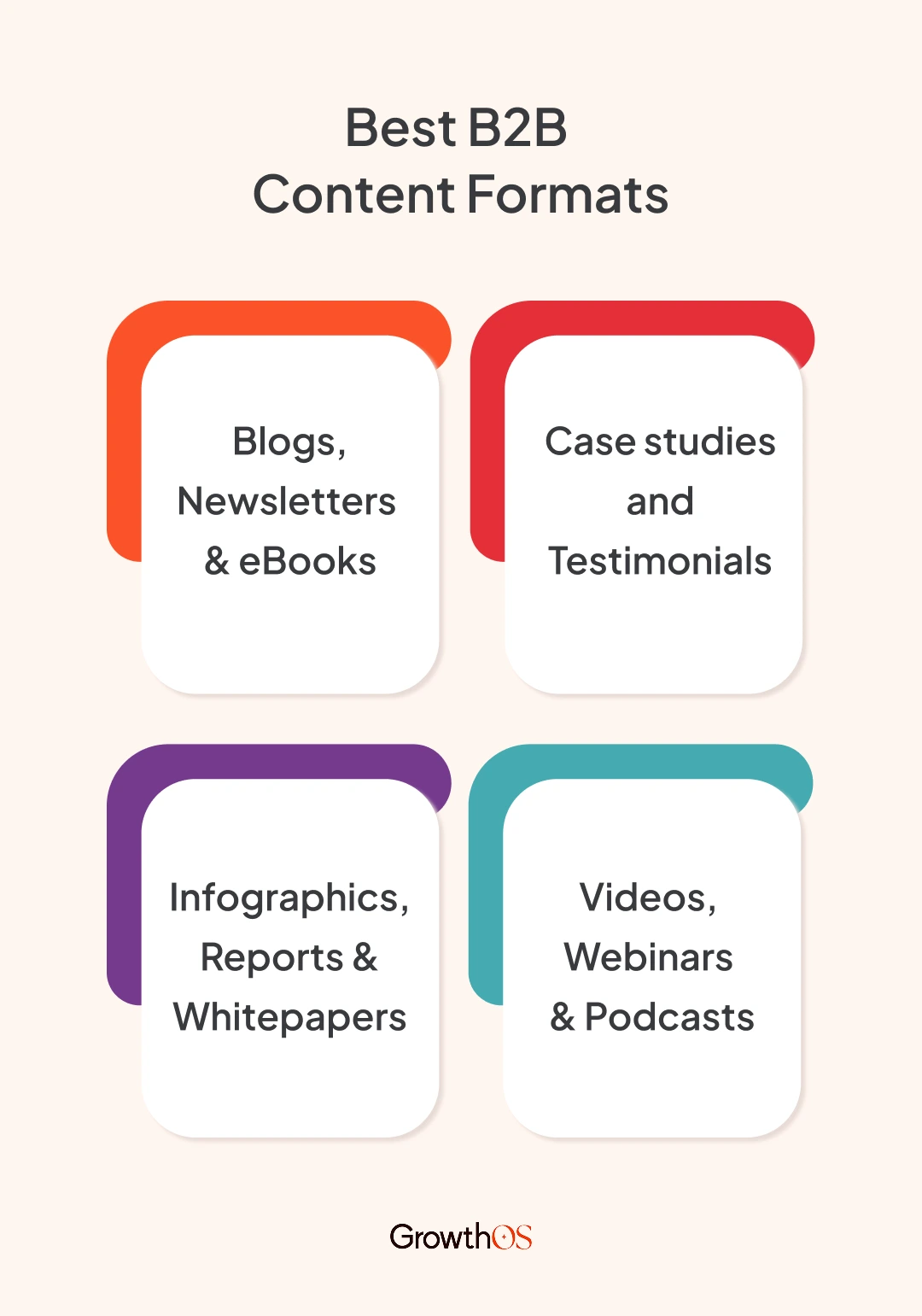
When you sell to other businesses, content has to do more than “get attention.” It has to help buyers research, compare, and make a decision they can defend internally. That is why B2B content rarely lives in one format. A blog post might spark interest, but a case study builds trust that can lead to an inquiry.
Formats also matter because content discovery has changed. Search results, social feeds, and AI summaries surface different media types. 91% of businesses use video as a marketing tool, which tells you where attention has now shifted.
Now let’s walk through the core B2B content asset types and what each one is best at.
Blog Articles
Blog articles are the foundation of all B2B content programs because they are searchable, easy to update, and flexible enough to support every funnel stage.
At the top of the funnel (ToFu), blogs help buyers name the problem and understand the category.
In the middle of the funnel (MoFu), they answer evaluation questions like “how does this work,” “what should we choose,” and “what are the trade offs.”
At the bottom of the funnel (BoFu), they drive conversions with specific topics and strong proof points.
Let’s say you are selling finance automation software, a post like “Invoice Approval Workflow Checklist” pulls early stage searchers. Later, a deeper piece like “How To Implement AP Automation In 30 Days” supports evaluation. Both are blog posts, but the intent is different.
What to include in B2B blog posts that actually perform:
- A clear definition or answer, ideally in the beginning
- Steps, templates, or a framework the reader can apply
- Real constraints (team size, approvals, tools, timelines)
- Internal links that guide the reader to the next logical asset
Once blogs create awareness and demand, you need proof assets like case studies and testimonials that reduce risk.
Case Studies And Testimonials
Case studies are your strongest “decision stage” asset because they replace claims with evidence. A buyer might like your positioning, but they will still ask, “Will this work for a company like mine?”
A strong case study answers that question with context, not just outcomes.
What to include:
- The starting point (baseline, problem statement, initial investment)
- The constraints (stack, approvals, timeline, who owned what)
- The solution (what changed, in what order, why those choices)
- The result (clear metrics and timeframe)
- The proof (customer quote, screenshots, short video clip)
Check out how we have structured the case study of a SaaS AI video platform:
Read the full case study here: Expanding Digital Footprint of Tavus with SEO & AI Search Visibility in Just 10 Months
Testimonials work best when they add specificity. Video testimonials are especially useful because they feel harder to fake and easier to trust, which helps remove buyer doubt.
After proof comes depth. Buyers often need a single asset they can share internally, which is why long-form assets still matter.
Infographics, Whitepapers, Reports, And Ebooks
Infographics work when your information is dense but needs to be skimmed. They also travel well across social, newsletters, and sales decks. If the data is original, they can attract links too, which is one reason research driven visuals often outperform plain commentary.
A report can become the thing a stakeholder forwards in Slack with a note like, “Read this, it explains why we should prioritize this.”
The highest leverage version of these assets includes original data, benchmarks, or a clear point of view. That is also why research driven content tends to earn links and shares, especially when it is easy to reference. Backlinko’s content study with BuzzSumo found that certain formats, including infographics, attracted more links than videos and classic how to posts.
A practical publishing approach:
- Release the full report as a download for lead capture
- Publish a blog version of the key findings with charts and methodology
- Turn the main charts into a shareable visual set for social and sales
What makes these assets more effective:
- A clear methodology section
- A short “what this means” summary for busy executives
- Actionable recommendations that map back to real constraints
Once you have depth assets, video and live formats help you compress understanding, especially when buyers want to see how something works.
Videos, Webinars and Podcasts
Video is how B2B buyers validate quickly. It shows “how it actually works” details in minutes. These are some of the areas where videos perform the best:
- Product walkthroughs tied to a specific use case
- Short clips answering common objections (implementation time, integrations, permissions)
- Customer stories that include context, not just praise
- Tutorial videos that reduce onboarding friction
Webinars are effective when buyers need answers to their queries in real time. They are especially useful in complex categories where questions are predictable but answers require nuance. In our experience, this is the webinar format that stays useful after the live session:
- Problem framing
- Framework or approach
- Live example or teardown
- Questions and Answers
- Replay page with transcript and timestamps
Transcripts and timestamps also support search and AI summaries because the content becomes easy to scan and quote.
Podcasts work differently. They are not a quick conversion format. They build familiarity and trust over time, especially with senior-level stakeholders who prefer nuance and are interested in long-form content consumption.
Optimizing B2B Content For Search And AI Discovery
Different formats get discovered in different places, but the same principle holds. Make your content easy to understand, extract, and trust. So, irrespective of the format, follow this checklist to optimize your content for AI and organic search visibility:
- Put the main answer or definition at the very start
- Use headings that match real buyer questions
- Name entities clearly (roles, standards, tools, categories)
- Add proof (numbers, screenshots, methodology, examples)
- Use scannable structure (steps, tables, short sections)
- For video and audio, publish transcripts, timestamps, and a summary
- For visuals, include descriptive alt text and supporting context
Once your assets are built, the next step is to get them in front of the right buyers.
Distribution Channels For B2B Content Marketing Success
Great B2B content will only produce results when the right buyer sees it at the exact moment they are trying to make sense of a problem.
That is why distribution is not optional anymore. It is part of the strategy. It decides whether a blog post becomes a visibility/lead driver or just a mere article in a sea of thousands of other articles.
A practical distribution plan in B2B works like a portfolio. You spread attention across owned, earned, and paid channels because each one does a different job. Owned channels build repeatable reach, earned channels build trust, and paid channels give you controlled scale when something is already working.
In 2026, search discovery is being shaped by AI summaries and multimodal answers. So you cannot rely only on rankings to bring people in. You need channels that build direct engagement, like email, communities, webinars, and social audiences you can reach repeatedly.
Organic Search And SEO Strategies For B2B Content Distribution
Organic search is still the highest compounding distribution channel in B2B. The difference now is what “winning” looks like.
Earlier, the goal was simple. Rank, get clicks, convert.
Now, your content also needs to be easy to interpret and parsed to be presented in AI-generated answers. That dictates your B2B SEO strategy and changes how you structure pages. It pushes you toward clarity, explicit definitions, and content that answers follow up questions in the same article, not across ten thin posts.
Here is the practical way to think about B2B SEO distribution:
1. Start with commercial intent, not just volume
Informational topics build awareness, but commercial and evaluation topics move deals. Think best X software, X vs Y, X pricing, X implementation, SOC 2 checklist, ERP integration guide. These are the pages that attract readers who are closer to buying.
2. Structure pages so both humans and AI can extract the key points
That means short definitions near the top, clear section headings, tables where comparisons are needed, and a clean FAQ at the end. Structured data can support this when it is used correctly, but the bigger win is the way the content is written and organized.
3. Treat freshness like a distribution advantage
In B2B, a page that is accurate for 2026 will earn trust faster. Update screenshots, examples, benchmarks, and process steps. Then surface those updates in your intro and table of contents so both readers and search engines can see what changed.
4. Build internal linking like a guided path
A buyer does not want one article. They want a learning path. If your awareness article does not naturally lead to a comparison page, an implementation guide, and proof assets, you are leaking demand.
If you sell a procurement platform, a “What Is Purchase Order Matching” post can bring in awareness. But it should internally link to “3 Way Match Process,” “AP Automation ROI,” “ERP Integration Guide,” and at least one case study. That is how SEO becomes distribution across the whole funnel, not just a traffic channel.
Once the search brings the right people in, social channels keep you in their world while they are still evaluating.
Social Media Channels For B2B Content Marketing
Social distribution is not about going viral. It is about staying visible while the buyer is still forming opinions.
As per CMI’s data, 85% of B2B marketers consider LinkedIn to be the top social platform because it delivers the best value. It is a fact that needs to be considered seriously because it tells you where you’ll get most of the attention.
The mistake most teams make is sharing blog post links with little or no context and hoping for clicks. In B2B, the better approach is to publish “native” content that earns attention first, then use the link as the next step. These are the popular formats that you can leverage:
- A short text post that teaches one idea from your article.
- A carousel that summarizes the framework.
- A 60- to 90-second video that explains one decision point.
- A comment thread where you answer objections and then link the full resource.
We’ll explain with an example. Let’s say you publish a long guide on “SOC 2 for SaaS.”
On LinkedIn, you do not quite literally post “we just published this new blog, read here.”
You post “3 things procurement teams ask before approving a SOC 2 vendor,” then you add the link in the comments for people who want the full resource.
That is how social media supports distribution without relying on click-hungry formats.
Email Newsletters And Marketing In B2B Distribution
Email turns one-time visitors into a loyal audience.
As per CMI, 71% of B2B marketers use email newsletters as a distribution channel. That number matters because it is a signal. Serious B2B teams treat newsletters as a core channel.
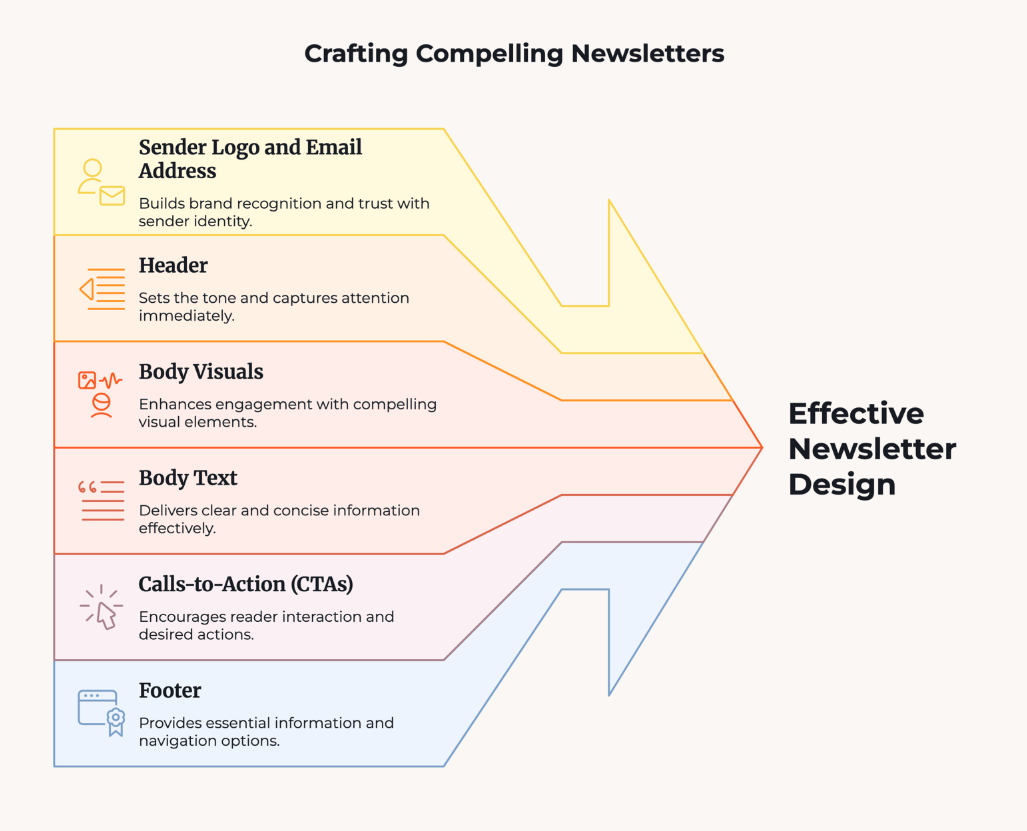
The key is how you write and structure the newsletter.
A newsletter should not feel like a blog roundup. It should feel like a weekly “thinking note” that makes the reader sound more intelligent at their job and naturally points them to the key or pillar asset.
You can consider following a simple weekly newsletter structure like so:
- One problem or decision (2 to 3 short paragraphs)
- One framework or takeaway (bullets)
- One linked resource (your pillar page)
- One reply CTA (ask them a question that helps you segment)
When you have something that is clearly working, paid distribution helps you scale it without waiting months.
Paid Promotion And Influencer Partnerships For B2B Content
Paid distribution is another growth lever.
Sprout references Semrush data showing 49% of very successful content marketers used paid social for promoting content.
This is why “boosting” or promoting content is the wisest choice when you have a winner.
The most common paid mistake is promoting awareness content to cold audiences and expecting demos. Paid works better when you promote mid and bottom funnel assets to people who already showed intent.
What to promote first:
- Comparison pages
- Implementation guides
- Case studies with clear outcomes
- Webinars with real Q and A
Influencer partnerships work in B2B when you treat them like credibility partnerships. Find niche operators with trust, not generic creators. Then co create assets that feel practical, like teardown webinars, templates, or benchmark discussions.
CMI’s research also notes paid media is a 2026 investment priority for technology marketers.
Now let’s address the big shift that is making all of this more important.
Navigating Search Behavior Changes In 2026
The core change is not that SEO is dead. It is that clicks are less guaranteed.
AI summaries reduce the need for a buyer to open ten pages. They can skim an overview, get the short answer, and move on. That means your content has to deliver value even when someone only sees a snippet, and your distribution cannot depend on one channel.
The practical response is to build content and distribution that still works in a zero click world:
- Put the definition and the key takeaway early.
- Add structured summaries, tables, and FAQs that can be extracted cleanly.
- Build an owned audience (newsletter, webinar list) so you can reach buyers again.
- Use social and partners to keep showing up during evaluation.
If you do this right, discovery becomes multichannel. Search introduces you, social keeps you familiar, email keeps you connected, and paid scales what is already resonating.
Next, we will map how to measure whether distribution is actually working, so you can double down on what drives qualified demand and cut what does not.
Measuring And Optimizing B2B Content Marketing Performance
Content teams usually do not fail because they publish bad content. They fail because they cannot prove what is working, so they keep publishing more and hoping something hits.
Measurement fixes that. It turns content marketing into a system you can manage, defend, and improve. The sections below break it down in the same order most B2B teams mature, first the KPIs, then the tools, then the optimization habits, and finally the AI visibility layer.
Now let’s start with what you should track.
Key Performance Indicators For B2B Content Marketing
If you only track pageviews, you will keep producing content that looks successful and performs like a hobby.
A better KPI setup follows the buyer journey and your revenue model. It answers four questions, in this order.
1) Engagement KPIs (Are the right people actually consuming it?)
Engagement is not likes. It is proof that the content was useful enough to hold attention.
Content Marketing Institute’s 2026 research shows audience engagement (views, downloads, shares) is the most common way marketers measure thought leadership success (80%).
Track:
- Engaged sessions and returning users on core topic pages
- Scroll depth and time on page on guides and comparisons
- Downloads and webinar attendance, not just registrations
- Brand search lift after publishing a cluster (simple proxy for trust)
2) Demand KPIs (Did content create or capture intent?)
This is where content becomes a growth lever. Here, you be keeping an eye on:
- Demo, pricing page visits, and sales contact clicks from content paths
- Email signups and resource downloads on evaluation content
- Product signups from content assisted sessions
- Branded search growth (a proxy for trust and recall)
3) Pipeline KPIs (Did content influence deals?)
This is the KPI layer most teams avoid because it requires attribution hygiene. But it is the layer that makes content defensible in leadership meetings.
Track:
- Pipeline influenced by content touches (first touch, last touch, and assisted)
- Conversion rates by content type (blog vs webinar vs case study)
- Deal velocity for contacts who consumed specific assets
For example, if your average deal is $18,000 and a content assisted deal closes even 10 days faster, that has real cash flow impact. Track “days to close” for deals with at least one high intent content touch, like a comparison page or implementation guide.
Once you know what to track, the next job is choosing the tools that can show the full journey, not just the top of funnel.
Tools And Methods For Measuring B2B Content Success
You do not need 15 tools. You need a small stack that answers four questions: what is working in search, what is working on site, what is moving people through the funnel, and what sales conversations are telling you.
1) Website And Funnel Analytics (What do people do after they arrive?)
Google Analytics 4 is still the baseline because it can show cross channel performance and attribution models inside the Advertising section.
Set up:
- Key events for demo requests, book a call, signup, and report downloads
- UTMs for every campaign and newsletter link
- Content groupings (by topic cluster or funnel stage)
2) CRM And Marketing Automation (What turns into pipeline and revenue?)
If you use HubSpot, you can create attribution reports and measure multi touch revenue attribution for content like blog posts and emails.
This is where you stop saying “content drove leads” and start saying “this cluster influenced $220,000 in pipeline last quarter.”
3) SEO Intelligence (What is winning in search, and why?)
Ahrefs is useful for tracking keyword movement, competitor gaps, and backlinks that indicate authority. Neil Patel explicitly calls out Ahrefs as a strong tool for SEO monitoring and competitor insights.
Track:
- Non branded keyword growth by topic cluster
- Rankings for commercial intent pages (comparisons, alternatives, pricing logic)
- Backlinks earned by research, reports, and tools
4) Sales And Call Intelligence (What buyers actually care about)
This is the missing piece in most content reporting. Your analytics can tell you what people clicked. Your sales calls tell you what people doubted.
Tools like Gong are built for conversation intelligence and revenue teams, helping capture and analyze customer interactions.
Practical method:
- Pull common objections from sales calls (security, integration, implementation time, budget approval)
- Turn them into FAQ sections, comparison pages, or short videos
- Re run attribution after updates to see if conversion rates improve
Once measurement is in place, optimization becomes easier. You stop guessing, and you start iterating.
Optimization Techniques For B2B Content Marketing
Optimization is where most compounding happens. Not by publishing 50 new posts, but by improving the 10 that already have traction.
A practical quarterly routine:
1) Run a quarterly content review
Sort content into four buckets:
- Keep and scale (already drives qualified actions)
- Update and relaunch (ranking or conversion slipping)
- Consolidate (multiple pages competing for the same intent)
- Retire (irrelevant, outdated, or off ICP)
2) Refresh pages with real upgrades, not cosmetic edits
Good refreshes usually include:
- Updating examples, screenshots, and tool references
- Adding missing sections that answer obvious follow up questions
- Improving internal links to guide the next step
- Adding a table, checklist, or template that increases usefulness
Backlinko’s repurposing guidance is clear that repurposing only works when you adapt content to the new format, not when you copy paste. Their scaling example explains they cut significant content to make a blog post work as a video, because formats have different constraints.
3) Test small before you scale
Before you turn a guide into a full webinar series, run a smaller test:
- A LinkedIn poll to validate the angle
- A short video explaining one section
- A single email issue focused on one takeaway
If the test performs, then you invest.
Use case example:
If a post drives traffic but no demos, add one mid funnel step first, like a downloadable checklist or a webinar invite. Measure whether that increases lead capture without hurting engagement.Now for the part most teams are still not measuring well, what happens when AI systems surface your content without a click.
Advanced Metrics For AI Influenced B2B Content
AI driven discovery changes what “visibility” means. Your content can be used, summarized, or cited even if the user never lands on your page.
Google’s own documentation explains AI Overviews and AI Mode from a site owner perspective, and frames inclusion as part of modern Search experiences.
Structured data also remains one way Google understands content and entities more clearly.
So what should you track beyond standard KPIs?
1) AI visibility signals (Are you showing up in AI answers?)
Track:
- Brand and product mentions alongside category terms
- Whether your definitions, frameworks, or stats are being repeated elsewhere
- Referral traffic from AI surfaces where available (some analytics will bucket this under referral)
Practical method: set up a monthly check where you run your core buyer questions in major AI tools and log whether your brand is mentioned or cited. Track this like rankings, but tie it to priority topics.
2) First party data growth (Are you reducing reliance on third party discovery?)
If AI reduces clicks, first party data becomes the hedge.
Track:
- Newsletter subscriber growth rate
- Webinar registrant growth
- Returning visitor rate to core guides
- Conversions from “reply CTA” segmentation
3) Content extraction readiness (Is your content easy to summarize correctly?)
This is not a vanity metric, it is a quality control metric.
Audit:
- Do pages have clear definitions near the top
- Do they answer related questions in the same page
- Are entities named consistently (product, category, standards)
- Are tables and FAQs present where they add clarity
This is how you protect against being summarized poorly.
With measurement in place, you can finally optimize with confidence. You know what content is driving real movement, which channels are compounding, and where AI discovery is helping or hurting.
Next, we will zoom out and look at the trends shaping how B2B content marketing evolves beyond current practices, so you can future proof what you build now.
Conclusion
B2B content marketing in 2026 is no longer about publishing more. It is about building a system that earns trust, captures demand, and supports revenue across a longer buying cycle. That starts with clear positioning and buyer led strategy, then extends into assets that match real decision making, distribution that compounds across channels, and measurement that ties content to pipeline, not vanity metrics.
The AI shift adds one more requirement. Your content must be structured, specific, and easy to extract, so it can show up in AI generated answers without losing accuracy or intent.
If you want a team to run this end-to-end, GrowthOS can help. We manage content strategy, SEO execution, and YouTube growth, so your best ideas get found, understood, and acted on.
👋 Want to us to support with your B2B content marketing? Book a call to discuss your growth objectives.

Taher Batterywala
Organic Growth Lead
Taher Batterywala is an SEO and Growth Content Marketer. With over 8 years of B2B marketing experience and a diversified skill set, he helps craft winning strategies and execute end-to-end campaigns for B2B and SaaS companies to achieve scalable organic growth. Outside of work, he enjoys watching movies, photography, and dabbling in design. You can find him on LinkedIn and X.

More insights
Get Growth Insights Delivered to Your Inbox
Join B2B marketers getting weekly strategy breakdowns on SEO, AI search, PPC, and YouTube—straight talk, no generic advice.
Oops! Something went wrong while submitting the form.




.svg)